Wednesday, July 22, 2015

[Best of Batman] Dark Victory by Jeph Loeb

So, okay then. This is the sequel to The Long Halloween which I was not the biggest fan of to begin with. Still, on the enjoyment scale, this one was better. That was until I got to the last two issues. Ironically enough, while The Long Halloween had a rough start but a nonetheless merciful albeit incomplete resolution, Dark Victory managed to get a stronger and more concise beginning but a more frustrating and pointless ending. I don't understand this travesty. The Knightfall series is honestly more better written. Well, Loeb's stories should be fundamentally incomparable to Knightfall since the latter after all was written by multiple writers across different Bat-titles. The sole reason I compare them is becauase I was also quite lukewarm towards Knightfall but I would pick the omnibus series over either of Loeb's work any day.

I don't want to get into details about Dark Victory. Ultimately it's a Batman story that brought no joy or appreciation for me. I thought I could like any kind of Bat-story out there (I eventually did warm up to Greg Hurwitz in his writing for New 52 The Dark Knight run) but Jeph Loeb had officially made me question that reality. I can state from here on out that I don't enjoy the way he writes Batman. There were a few areas that have potentials, most notably for Dark Victory. The central murder mystery story had a better foundation; a series of cop kilings with the murderer pinning notes on the corpses depicting the child's game Hangman as secret messages. At least the victims were sympathetic people and not criminals who are a tad more irredeemable. But the holiday-themed murders were needlessly overplayed like the torture horror of the SAW franchise.

Next, both Batman and Commissioner Gordon show remorse and guilt over the loss of Harvey Dent. Batman spent most of the time blaming himself in his inner monologues about Dent's transformation to Two Face. This would have been acceptable except that I never really saw a friendship developed in the prequel among these three to make the drama and internal conflict believable enough for me to care about. And then there's the women. The female characterizations were easily  appalling and cheap as far as stereotypes and pigeonholing goes. Every woman is given the roles among grieving spouses, easily manipulated girlfriends and whimsical seductresses--and with little to no clarification for motivation or pay-off to their arcs whatsoever.  I love Bruce and Selina's relationship in general but Loeb had accomplished the impossible feat: he made me hate them together. I couldn't stand their stupid dance of coquettish nonsense, especially so in Dark Victory. Aside from the badly drawn costume, Catwoman had a weak arc for both Loeb stories and therefore her usual morally ambiguous actions were not as promising or as riveting to see unfold. The only two women who are at least trying to break the mold were gangster Sofia Falcone and possible sociopath Gilda Dent who have interesting characterizations from the start but were sadly overlooked and underdeveloped midway through both stories.

I don't even want to acknowledge the wasteful space female District Attorney Porter took up for Dark Victory. What a pathetic and unbelievable character. And goddamn Dick Grayson who is featured in the Absolute Dark Victory cover prominently doesn't even have a major contribution to the storyline. All he did here was sulk and look morose. He isn't Jason Todd or Damian Wayne, dammit. Where's the sparkling personality I've always loved about the first Boy Wonder? Overall--yeah, fuck it. I don't have any parting words. But I will rate this one star higher than fucking Long Halloween just because.


RECOMMENDED: 7/10

Monday, July 20, 2015

[Batman: The Animated Series] Episodes 6-10 Review


I am just absolutely floored about this series and I'm only ten episodes in at that. Watching it back in high school, I don't think I was able to grasp how beautifully animated this series was since I can barely remember most of its details. But now that I'm more conscientious of the shows I consume and have decided to pick up this one again, I just realized that Batman: The Animated Series truly holds up as a work of art; it was a grand masterpiece that played up all the greatest elements and strengths of the entire Batman mythos and legacy and mixed them together to come up with this scintillating and endlessly compelling cartoon adaptation that can be watched and enjoyed by anyone regardless of age. The best feature of this show, personally, is the musical accompaniment set composed for each episode. All of the pieces were performed by an orchestra and each song evokes more powerful feelings that also served to enhance the scene it was incorporated into. This becomes even more notable in episodes 6-10 that I sometimes have to turn the speaker up and get the unmistakable sense that I was a part of the world of Gotham; running across its crime-infested streets with Batman by my side, unafraid of anything, eager to be daring and join in his heroic acts. I think the sound direction and musical scoring of this show will never stop to impress me and other people have agreed as well, seeing as they gave awards to the composers themselves, particularly Shirley Walker who contributed to a lot of its pieces.

While the first five episodes of this show showcased Bat-villains as an episode's focal point of the narrative such as the case with the Joker (who made an appearance twice), Man-Bat and Scarecrow, the next five episodes on the rundown (with the exception of the tenth episode featuring Harvey Dent as Two Face for the first time) tackled stories concerning the minor yet just as damaging crimes and exploits in Gotham City. The Under Dwellers, POV and The Forgotten were surprisingly riveting episodes that put Batman in situations where viewers can actually see him make a difference. Batman is not just all about confronting and kicking the asses of costumed freaks and psychopaths; he's also about helping the oppressed factions of his city. Be A Clown is the Joker's third appearance though it had a nice father-son sub-character arc as well. I had vague recollections of the Two Face episode, and I remember bits of it as I watched it. I think it may have  been the very first episode of the show that I have accidentally stumbled upon that fateful night after I got home from school and was flipping through the channels. 

But I'm getting ahead of myself. Let's break them all down, shall we?

In this episode, Batman discovers a very literal underground child labor circuit which was pretty horrible in itself so the details of such a nefarious crime left a bad taste in my mouth afterwards. The perpetrator of this crime is some lowlife scum who fancies himself as the caretaker of these orphans whom he may have abducted himself or they decided to go to him because nobody else would take them anyway. To top the heap of his douchebag moves, the unnamed villain for this episode had also commanded the children never to speak in his presence as he kept them in complete darkness since their quarters are in the sewers. If they disobey or did something to offend him, he puts them in a cell with bright lights since these children can no longer see that clearly so blinding them with light was pure evil torture. One of the children who escaped was named Frog and he was taken by Batman and was kept safely within Wayne Manor while Batman investigates. Frog's hilarious interactions with Alfred were a nice touch for the episode. However, I was completely laughing for a different reason because of the fact that the villain can control the crocodiles in the sewers. I theorized he may be using some equipment to get them to obey him but the episode offered no explanation and I was fine dismissing the logic of it because all I want is for the asshole to die a painful death. But he didn't. Oh, well. At least the orphans were rescued by the GCPD and now they can get back to the real world and experience the sun in a positive manner again. The episode ended with Frog uttering a word for the first time which was "the light!", exclaiming it in a victorious way which was a touching moment. I liked this episode because we get to see Batman handle other crimes in his city that don't involve the rogues gallery. The Batman vs. crocodiles action sequence was pretty funny and enjoyable to watch as well.


The first thing that got me excited about this episode's narrative approach and visual execution was the fact that it had a Rashomon vibe from the get-go. The story revolves around a police stakeout gone wrong among Detective Bullock and Officers Montoya and Wilkes as they responded to a sting concerning drug traffickers flocking to a warehouse, probably striking deals. When they were only able to secure one suspect in custody, an internal affairs investigation was held with the three of them giving conflicting stories as to how it all went down. Bullock was obviously lying to save face, considering he went in without a back-up, started a fire, and was promptly rescued by Batman from getting burned alive. I like that while he's in the middle of fabricating his tale, we see the scenes unfold in screen which contradict his official statement. Meanwhile, Officers Wilkes and Montoya's stories do fit well enough together as they each shared their experience and subsequent encounter with Batman while trying to apprehend the criminals. Since IA can't figure out the truth, the three had to be under suspension so they had to give up their badges. Officer Montoya, however, was not discouraged from trying to pursue a lead from the case she's not supposed to be working on. It was good thing she did, since Batman was captured by the thugs during the conflagration in the warehouse. She helped him fight off the fiends and successfully brought them to justice afterwards. It was great that the show introduced Officer Montoya who is one of the recurring GCPD characters from the Batman comics. I was happy that the role she played here was that of a competent law enforcer who had good instincts and was clever enough to aid Batman in catching the criminals. Bullock also had a humble moment and Commissioner Gordon defended his constituents from further IA prosecution.

Much like The Under Dwellers, this episode once again touched upon the transients and discarded members of the Gotham City such as the homeless and a few minimum-wage workers. A crime syndicate has been abducting them and forcing them into labor and Batman goes undercover, wearing a disguise. It was great to see him do detective work that involves this because it was certainly reminiscent of Sherlock Holmes who would also wear disguises and live among the criminal element to get information and observe the dynamics more closely. Unfortunately, during a confrontation with some thugs, Bruce got himself hit on the head, rendering him in a state of temporary memory loss. So, while he was taken to the labor camp, he had no recollection of who he is and what he should be doing. As the episode approached its climax, Bruce's mind rebels against the memory loss and pieces out the fragments of consciousness through dreams. The dream sequence itself was amazingly rendered, showing Bruce walking around mirrors and then ending up seeing a reflection of the Joker. But the real catalyst had to be when he heard one of his fellow workers talk about his family and the possibility he may never see them again. Bruce immediately recalls his own parents and the vow he took to become the city's Dark Knight, its avenging guardian. With Bruce fully aware of who he is, he managed to escape long enough to be found by Alfred who was flying his Bat-jet. He later comes back to the labor camp as Batman and finishes the job. This episode was commendable because it placed Bruce in a vulnerable position much like in the Scarecrow episode Nothing to Fear where he was injected with a fear toxin and started hallucinating his late father. Much like that one, this had enough impressive character moments for Bruce that makes you really root for him and not just as Batman. I should also mention that the musical scoring they used had a great folksy tune to it that really captured the setting where most of this episode happened (a sandy, hot desert).

This installment marks the third appearance of the Joker though the story was less about him and more of the relationship between a politician and his neglected son, Jordan. Busy with running a campaign, his father was relentlessly more focused on his career than his son who is celebrating his birthday. The Joker takes advantage of this and arrives at the party disguised as another clown named Jecko. He captures Jordan's attention instantly since he was already interested in magic tricks himself. As the Joker leaves the party (but not without placing a dynamite on top of the birthday cake), Jordan hides in his truck since he could see that the only way he can find some sort of happiness is from running away and "joining the circus". Distraught over the loss, the father pleads to the GCPD to find his son and vows to himself that if he gets Jordan back, he will do things differently and not take his boy for granted. Meanwhile, the Joker was not pleased to have a child in his secret lair but he adjusts to the situation and treats it as a social experiment. He turns the boy into his assistant as he lures Batman and ensnares him into a trap. Jordan was a good kid though and does not possesses the Joker's sadism in any form so he tries to help Batman, only to be kidnapped by the Joker and led to ride a roller coaster. After a short while, Batman was able to apprehend the Joker and get Jordan safely back home who jumped into his father's welcoming arms. This episode was definitely pleasant for the way it resolved this small family conflict. I also enjoyed the Joker's scenes with Jordan and how he naturally gravitated in turning the boy into his own pet but failed miserably since Jordan is inherently a good and upstanding little boy. Don't worry, Joker. You'll get another chance to corrupt a more susceptible and damaged mind later in the series. And it'd be worth it for everyone.

I just finished reading and reviewing Jeph Loeb's The Long Halloween last week and I wasn't that into it. I didn't care much about Harvey Dent's transformation into Two Face in that story so I was more than pleased to watch this show's version of it which was much more believable and substantial. In this episode, Harvey Dent is running for his third term in the District Attorney's office and he was focused on bringing down the illegal operations of the crook Rupert Thorne. This gangster, however wants to play it smart and so he hired one of his goons to uncover Dent's skeletons in the closet. What he found was Dent's psychological evaluation. It turns out that Dent has a split personality his therapist dubbed as "Big Bad Harv". This personality arose from Dent's longtime repression of his anger and guilt. By not owning up to his negative feelings, his psyche created another personality that expresses such strong emotions quite recklessly. We witnessed this other Harvey taking over every time Dent loses his temper and this other side of him gets crazy and extreme. Thorne tries to use this information to blackmail him but only succeeds in awakening the Big Bad Harv. I like the fact that the show has established a friendship between Dent and Bruce Wayne himself which was why this was very personal for Batman too. Unfortunately he can't do anything to help his friend since the conflict is internal and only Dent himself can fix it. The episode ends with Dent making an escape from the hospital after looking at his new face for the first time since the accident with Thorne where a chemical tank got blown up while he was chasing the crook, and he suffered facial injuries from it. His twisted features now reflect his split personality but eventually the Big Bad Harv might take over for good and this is something I eant to see happen in this show. Dent's conflict with Thorne is unfinished as well and I got the feeling he's coming back for him soon enough. I would also like to see how Batman handles Dent as Two Face.

These had been a great batch of episodes. There is depth and excitement in every installment, ranging from the most action-packed to the most poignant of narratives. 

Thursday, July 16, 2015

[Best of Batman] The Long Halloween by Jeph Loeb

I won't lie. I had high hopes for this story. After all, it has been consistently placed in the Best Batman Stories lists, either as part of the Top 10 or Top 5 graphic novels you have to read. Comprised of thirteen issues, Jeph Loeb's The Long Halloween had great promise. It had all the right ingredients. We got Bruce Wayne just starting out his early years as Batman, and his partnerships with Commissioner Jim Gordon and District Attorney Harvey Dent. We got the Falcone and Maroni crime families in the spotlight, and a serial killer hunting the mobsters down using holidays as the common theme of this string of murders (hence earning him the name of the Holiday Killer). As a bonus, we also get appearances of the rogues gallery like the Joker, Scarecrow, Mad Hatter, Poison Ivy and Catwoman.

However, that great promise I mentioned dwindled to unrealized potentials the closer I get to the supposed climax. Also, its commendable traits from the beginning such as the Batman-Gordon-Dent triad, mob involvement, serial killer murder mystery and rogues' gallery participation, look good in theory but REALISTICALLY SPEAKING the actual execution of all these elements together fell short. Being served by so many samplings in one sitting could cause indigestion, no matter how potentially good each serving should be.

And that's mainly my problem with The Long Halloween. Much like Jeph Loeb's later work HUSH (which, granted, was more enjoyable in its approach than this one), this story suffers with putting so much material in its scope that it was pretty much inevitable for some of its parts to collapse under the pressure of the multiple baggage it struggles to carry along. I don't necessarily think this was a bad story, period. I believe that if you take each individual parts and separate them from the convoluted mess of its sum then what we get are compelling subplots that might have deserved their own separate arc altogether. But instead we get them all squeezed into one dragged-out arc that was unable to flesh out its main characters particularly Harvey Dent whom I did not connect with in any way, let alone be emotionally invested enough on his moral struggle and dissociation that his transformation as Two Face became meaningful to mourn about. Seeing this story having high ratings in Goodreads and scintillating reviews from common friends (save a noticeably one-star review from the mix) is a real head-scratcher for me at first especially when I was stuck in the seventh issue and found myself getting increasingly annoyed withe everything already. But after finishing it and thinking about what to write for twenty minutes or so, I realized that The Long Halloween is still a work that I suppose deserves its place in the top Batman stories because of the fact that it gave us Two Face's origin story, and that we were able to get the organized crime aspect of Gotham City explored and its enforcers like Carmine Falcone which Batman is also supposed to butt heads with, and not just duke it out with the likes of the Joker, etc. But those merits alone for me are really not enough to encourage newbie Bat-fans to pick this up at least not as a must-read. Maybe only as a passing suggestion. And that's a weak 'maybe'.

The trouble is that, because of so many elements put together, everything is half-baked. The mob families are goddamn one-dimensional. I did not care if they get killed at all which defeats the purpose of whatever the vendetta the serial killer has in disposing , and why readers should look forward to solving these crimes. Batman feels the same, apparently, since it took the Holiday killer so close to completing his holiday-themed killing spree for either Batman and Gordon to solve it. Only it doesn't get solved, not really. In the most baffling twist, it turns out that there are THREE KILLERS with each one's motive more unbelievable than the next. The more I examine each thread of this story, the more nonsensical it gets. And not laughably so, like HUSH, which I actually had fun reading even if most of the reason is because it's so dumb at times.

This was one, however, is just disappointing. The appearance of the rogues gallery could honestly just get cut and it won't affect anything. They were completely unnecessary and interrupted the flow of the narrative (if there even is one, sorta up to debate for me). I wished they focused more on the serial killer story because the holiday-themed covers were amazing to look at and that key feature to the killings was pretty impressive. Sadly, since there are three killers, the chilling aspect and the mind-fuckery of the method were diluted. As for the visuals themselves…Tim Sale has a surreal style but his illustrations have made certain scenes so incomprehensible that I have to stare at some panels over and over just to make sense of what I am looking at. Much like Loeb was with the writing of this story, the art could have been realized better.

I don't know have anything else to say now other than I have nothing more eloquent to offer in my piece. Just rehashing the entire story of The Long Halloween here has gotten me a little bit depressed because I thought I was going to like this story but after unloading all of these complaints I realized I wish I could just forget what I read. Not even the two volumes of Knightfall made me this sorely disappointed. But I still have Dark Victory to finish which is a sequel to this fucking thing. I will keep an open mind and give it the benefit of the doubt. Originally, I was going to review The Long Halloween tomorrow but it occurred to me that I want to get it over with as quickly as possible so I forced myself to come up with this and I hope it was sufficient enough.


KINDDA RECOMMENDED but feel free to skip: 6/ 10

Wednesday, July 15, 2015

[New 52] The Dark Knight by Greg Hurwitz

Out of all the New 52 Batman titles, The Dark Knight is the only one I never really got into as much as the others. The first volume collected entitled Knight Terrors was written and illustrated by Paul Jenkins but these issues were subpar and lacklustre and their artwork was mainly the most exciting part about the ordeal. When Greg Hurwitz took over the writing duties and Jenkins stayed as the artist, the second volume Cycle of Violence finally had more substance than its predecessor though their is uneveness in the characterization and the overall plot presentation.

Nevertheless, I was impressed that Hurwitz placed enough effort to tell us a gripping tale concerning the Scarecrow and his descent to madness which started with ab awful childhood. On the other hand, Bruce Wayne's love life was also touched upon when he started getting serious with the Ukranian pianist Natalya who seriously gave me Silver St. Cloud vibes. I remember enjoying a few parts in Cycle of Violence and as few as they are, I enjoyed them immensely and they have to be the character-centric moments in the volume.

Now, this third volume called Mad concerns the Mad Hatter himself, a villain in rogues' gallery I honestly did not care about as much. Much like with the Scarecrow, the same formula was applied. Readers get to witness firsthand the struggle and descent to madness that Mad Hatter experienced which somehow gave us insight as to why he is committing crimes the way he had been doing during the present. Basically, he is trying to recreate his happiest memory with his childhood crush Alice and Gotham has to suffer the unbelievable ways he inflicts his unique vision of horror on its citizen just to accomplish this. It really was the same thing as with the Scarecrow narrative in the previous volume about the child abductions although Mad had a much more satisfying pay-off and conclusion. If it wasn't for that vital difference, the two story arcs are easily interchangeable. 

That would have been an unfair generalization though because I believe I much cared about Hatter's experiences which were bittersweet. And I enjoyed the Alice in Wonderland symbolism since I've always been an Alice fan myself. Artist Ethan Van Sciver delivered just as strongly as Jenkins did in the first volume. His body of work in this one was absolutely chilling in spite of the colorful panels depicting Hatter's ugly version of Wonderland. And the Hatter himself looks positively deranged. I wasn't into the Scarecrow sewing his lips shut in the last volume, personally and I like that the Hatter was drawn less conspicuously insane except for the close-ups of those weirdly spaced eyes. Those eyes completely creeped me the fuck out.

Bruce's relationship with Natalya has also reached its expected tragic and disastrous death. Natalya was after all the ghost of Silver St. Cloud right to her demise which actually made me feel bad because those precious small moments of Bruce finally telling her that he is Batman were just so adorable and it sucks hairy donkey balls that the moment he has let another person in is what cost her life. It was a nice change of scenery that was almost nostalgic; to see Bruce Wayne actually try to live his life outside of his vigilante calling. It broke my heart just a little bit to see him hopeful and only to have that hope bashed in its head. Hurwitz made it believable enough for me so when he flipped the fuck out by the last issue, I bought it.

As a standlone title, The Dark Knight can pull of stuff like this without affecting continuity in other titles so don't expect Scott Snyder to talk about Natalya in his own Bat-run because she only existed in TDK, much like the nefarious and city-wide crimes committed by Scarecrow and Mad Hatter in their respective volumes are exclusive to TDK. There's a bonus story in here called Once Upon a Halloweenabout a night with Penguin, Scarecrow and Mad Hatter which was rather interesting to say the least. I was baffled by it but I nonetheless thought it was quirky and fun to see these villains painted in such a light. So, overall, The Dark Knight volume 3: MAD was a great improvement from the last two volumes combined. I certainly hope Hurwitz would continue this upward projectile in his next collected volume which I will get around to reading and reviewing next.


RECOMMENDED: 8/10

Tuesday, July 14, 2015

[Best of Batman] Gates of Gotham

"How can you hope to deal with Gotham's future when you know so little about its past?"

Current Batman series writer Scott Snyder used to write for Detective Comics back when Dick Grayson took the mantle of Bruce Wayne as Batman. Final Crisis complications and whatnot demanded such a change in heroes; much like for today's post-Convergence event whete Bruce Wayne is once more a goner. You just have to be there to understand. In any case, this is the second major story arc collected in as a graphic novel that I've read from Snyder's Detective Comics run with Grayson as the Dark Knight. The first one is The Black Mirror which you better believe is worth the trouble. I cannot stress how much I recommend the bejesus out of it. 

In contrast Gates of Gotham is a thinner compilation with a story that ran only for six issues. The two stories are fundamentally different but just as enjoyable for the same reason which would be Synder's uncanny skill to weave together compelling murder mysteries/conspiracy tales. After all, this story does come straight out of the Detective Comics line so that's something that should be a given. While The Black Mirror is more of a psychological thriller, Gates of Gotham is an action-suspense pseudo-steampunk narrative concerning a forgotten pillar of Gotham and his deranged journey to destroy the city--or at least that's what he fancies himself to be: a revolutionist who felt deprived and abused by Gotham, particularly by its elite and felt the need to get even.

And by its elite I mean the Kanes, Cobblepots, Elliots and the Waynes. These are the four founding families who have respective skeletons in their closets and demons to contend with. Grayson is Batman now while Bruce is busy with this global vigilante organization (Batman Incorporated) so he had to do this alone but not without the support and assistance of Tim Drake (Red Robin), Hong Kong operative Black Bat and the arrogant Damian Wayne who is still a prickly and insecure pre-teen who is always disagreeable just for the sake of it. I say this with all the love and affection I have for his Peter J. Tomasi counterpart in the recent comics. 
"Like it or not, Gotham has royalty and they stretch back to the origins of the city. She protects her own but if you don't belong here, she'll never keep you."

I really loved reading Gates of Gotham because it was briskly-paced and wasted no time with the finer details; it packed and threw some serious punches. Each installment propelled you to keel reading, to look forward to the resolution and pay-off of the mystery surrounding the villain known as the Architect. Once again, Snyder, together with co-writer Kyle Higgins, employed Gotham city not just as a setting piece but as a participatory character itself. This was established through the flashback sequences concerning the city during its humble beginnings that also tied back to the villain's own arc and whatever motivated his nefarious actions in the present. The transition between past and present was seamless and suspenseful, and I could definitely see readers waiting in anticipation back then when Gates of Gotham was only released as a monthly issue during its run.

Gates of Gotham was reminiscent of the tonality and approach of his Owls saga in New 52 particularly the concept of secrets from the past and the historical style of storytelling. Unlike Owls, however, this was a brief exploration about one madman's quest to avenge a perceived wrongdoing which actually helped it because it wasn't unnecessarily drawn out. The confrontation between Batman and the Architect was an impressive display of how perception especially a narrow-minded and hateful one can destroy oneself and his connections with the present which was what the Architect wholly represents.
"Gotham doesn't change you. She just reveals things, whether you like them or not. And today she showed me that I can be Batman." ~Dick Grayson

On the other side of the coin, Dick Grayson also gets some insight concerning his role as the new Batman and why he has more than lived up to the code of the Dark Knight while also not losing himself in the process. While The Black Mirror story arc has already tackled the tricky disadvantage of becoming the mask you wear, Gates of Gotham reveals what lurks under that mask and why we can only wear it for so long until it rots away our real face and erases who we are.

Scott Snyder and Kyle Higgins' Gates of Gotham may only be less than 200 pages but it's a purchase you will never forget. I can easily see a well-adapted animation film for it. There are great action and narrative panels within its pages that are just begging to be realized on screen. The collection also has a bonus story about Bat-Inc's Muslim operative the Nightrunner as written by Kyle Higgins. Other supplements include the variant covers by Dustin Nguyen which werr as awesome as Trevor McCarthy's published ones. This is a highly-stylized action-adventure meant to be picked up by anyone and sooner rather than later.

RECOMMENDED: 8/10

Monday, July 13, 2015

[Batman: The Animated Series] Episodes 1-5 Review


I was fourteen years old. It was 2004 and my student life was mainly composed of academics and the occasional extra-curricular activity here and there, but I always get home by 5:30 to 6 PM everyday. The staple of shows that I watched was mostly a varied selection of Japanese anime. I was only a Sherlock Holmes fan for year back then and have acquired a growing interest in reading more classical literature particularly the works of Victor Hugo and Alexandre Dumas. Unlike most girls my age, I'm very attuned to male-based action-oriented adventures and crime mysteries, preferring these stories over the romance genre with fantastic elements (though I do indulge in female-centric magic anime like Sailor Moon and Cardcaptor Sakura when I can help it). I couldn't remember what exact day or what episode it was, but all I knew was that I turned on the television one day, surfed the channels and then stopped abruptly when this animation sequence came up (NOTE: I have to choose this awesome HD remake. Check it):


Now I've known Batman as early as four years old because of my paternal grandfather who used to wear this white shirt with the Bat-symbol and who puts Batman stickers on my bedpost, ones that I would scratch out in the evening because maybe I was bored but then I'd find that he had replaced them with new ones the next morning. I was able to watch the first Tim Burton film with Michael Keaton and Jack Nicholson but I barely remembered it. So my very first official and long-lasting interaction and subsequent love affair was with Bruce Timm and Paul Dini's beautiful noir animation masterpiece, Batman: The Animated Series. I've been dying to re-watch the entire four seasons and talk about it here in the blog since it has such a big influence when it comes to my overall appreciation and fascination for the Batman mythos. So, for this month of July, I aim to watch and review at least the first fifteen episodes of season 1. I advise that you find copies of the episodes of yourself online so we can enjoy it together.


If this show is the very first time a child would be introduced to Batman then I say that child is one lucky little rascal. The pilot episode touches upon Dr. Kirk Langstorm and his origin as the Man-Bat. His character makes a most recent appearance during John Layman's Detective Comics run for New 52 (issue #18 and the Villains Month special). I should mention that although this is the very first episode of BTAS, Bruce Timm and Eric Radomski made a two-minute promotional pilot episode which was later condensed as the official opening sequence as I posted above. So back to On Leather Wings. In this very first installment, we waste no time getting Batman's personal backstory. Instead, we just jump right ahead into the action. From what we can gather, he's been on operation in Gotham for a while now as the caped crusader, having the occasional run-ins with the GCPD when it comes to apprehending criminals and solving cases, which annoys Detective Harvey Bullock while the Commissioner, Jim Gordon, seems rather fine with his vigilante presence. We see Bruce Wayne out of the costume as well, mostly to accomplish things outside his scope as Batman. This usually includes crime scene evaluation of certain objects. In this episode, they were hair samples which were vital clues to uncovering the mystery behind the burglary and terror that the perpetrator has committed. At first, everyone thought that the Bat-like creature attacking people is Batman himself. As it turns out, it was a human-chiroptera hybrid called Man-Bat. It was the formulaic man-becomes-monster archetype which also served to contrast who Batman is and what he represents as a man who purposefully chose the symbol of the bat as an alter-ego. Viewing this episode, the most noticeable thing for me was the sound editing. The music for this show is satisfyingly amazing! It conveys mood and atmosphere more than the visual shots themselves and even enhance the viewer's enjoyment of every sequence laid before him or her. This was a promising pilot that has enough thrills to whet the appetite.

The second episode is Joker-centric with an added yuletide theme just to make everything extra special, fun and creepy in some instances. Again, if we consider this as a kid's first experience of Batman, more specifically of the Joker, then this episode might be perceived as something that's both absurd and terrifying. I watched this entire episode while trying to figure out what a child's first impression would be when he or she meets the Joker for the first time. I don't have a phobia when it comes to clown and I'd like to think it's because of my fondness and attachment for the Clown Prince of Crime himself. I think encountering him in this cartoon show did not frighten me at all, but I was already thirteen after all. I remember laughing at him and enjoying his jokes. Voiced by Mark Hamill, the Joker of BTAS has a varied range of laughter which could tickle, haunt or chill you to the bone. It's excellent voice work and I can say the same for Kevin Conroy as Batman. His silky smooth and reassuring tone as Batman makes you trust him quite easily. He also has a different pitch when he's voicing Bruce Wayne and the contrast is seamless especially when you compare it to whatever gravely voice Christian Bale used in his films which got a little distracting during scenes. Anyway, I think Christmas with Joker is a bundle of joy like a newborn psychotic baby playing with dangerous toys, which the BTAS Joker embodies, mind you. The animation sequences for this episode were lush and superb. The detailed confrontations with Batman and Robin fighting the ridiculous props and deadly weapons that the Joker used for his several schemes throughout this tale are enthralling to see unfold. With just this episode alone, I think BTAS captured the Joker in all his wonderfully colorful and unsettling darker shades. He's a showman, a performance artist of crime and debauchery, and with Mark Hamill's perfectly matched voice acting, his Joker is an unbeatable and frightening presence that makes you cringe because he also has the unique ability to make you laugh even if he's most probably killing you too. 

It's by the third episode when I noticed that there's not much of a continuity going on among episodes as of yet. In the second episode, we see Dick Grayson as Robin but now in this installment he is nowhere to be found and Batman has to face the Scarecrow and his henchmen alone. This was okay and I started looking at each episode as a collection of short stories that don't have to be related to each other for now. I know this will eventually change as the seasons progress anyway. In Nothing to Fear, the Scarecrow is a former university professor named Dr. Jonathan Crane who was kicked out because of his extreme and unusual experiments concerning phobias. The story itself was pretty straightforward and not as ornate or elaborate as the Joker episode that preceeded it. Scarecrow stole from the university and infected its constituents with a fear toxin. Coincidentally, he also injected Batman earlier in the episode which had Bruce hallucinating his father Thomas calling him a failure and a disgrace to the Wayne name. This character exploration more than makes up for the simplistic plot about the Scarecrow. This is the first time in the show that we touch upon Bruce as the man under the cowl, and his personal issues in relation with his family life (or a saddening lack thereof). Paralyzed with the fear of believing he had failed to live up to his parents' legacy, Bruce struggled to do his job as Batman but eventually we see him succeed in overcoming the fear toxin's influence as he announced as proud as he could that he is not a failure and that the hallucination he is seeing is not his father. "I am vengeance. I am the night," he clamors. "I am BATMAN!" I heard myself squeal in glee as Conroy uttered that so convincingly, I shit you not.

The Joker makes another second appearance in The Last Laugh which was less extravagant than the second episode but is nonetheless just as creepy and horrifying in some aspects. For some unexplained reason, the Joker is out and is making yet another merry mayhem by spreading his signature laughing gas around Gotham, rendering everyone in a fit of deadly and uncontrollable giggles. Why? Because it's April Fool's Day and so the date is basically begging for the Joker to add his special ingredient into the mix. He is the master practical joker after all. The highlights of this episode have to be when Alfred was infected and starts breaking things in Wayne Manor and the Joker and his goons robbing people while they have collapsed on the ground, laughing their asses off. Based on the two installments of the Joker so far, viewers can assert that though he's a psychotic criminal wreaking havoc anywhere he goes, he is also a fun and fabulous show-off who commits crimes with a sense of style and theatrical glee. This sharp-edged humor to his acts of violence adds to the horror of his presence. 

Pamela Isley is district attorney Harvey Dent's new squeeze and he looks like he's falling in love. Five episodes in and we finally get a formidable female villain in the show. It's interesting that the show didn't opt for Catwoman who is arguably the most memorable Bat-villainess of the canon. But they certainly delivered with Poison Ivy especially since they were also able to put her backstory and motivation for being what she is. She is fighting for a cause she is passionated about and seeks retribution from the people she holds responsible. Poison Ivy has always struck me as a representation of the more brutal side of mother nature and Pamela Isley is after all an environmental scientist who hoped to make a difference and when pacifist ways didn't cut it, she lashed out and became a deranged femme fatale who won't hesitate to use her sexuality. I love this character in the show a lot especially later on when she starts hanging out with Harley Quinn. This was a great appearance for an intriguing villainess overall.

So there you have it. I don't know about you but I am quitr eager to watch more episodes and talk about them here and hopefully more in length. Despite the lack of continuity among the first five episodes, this is a strong batch that can standon their own.

Thursday, July 9, 2015

[Best of Batman] A Death in the Family by Jim Starlin

I first knew about Jason Todd through the story Under the Hood written by Judd Winick which turned out to be his resurrection story. I watched the animation film with Supernatural's Jensen Ackles as Todd's voice actor and then I read the collected edition a few months after. 

To explain briefly, Jason Todd was the second Robin who succeeded Dick Grayson shortly after the latter quit and then joined the Teen Titans instead. Bruce Wayne first met Jason in the infamous Crime Alley when he was on patrol as Batman and he found the boy dismantling his batmobile to steal his gears which understandably annoyed Bruce but he nevertheless felt sorry for the boy when he realized that he was an orphan, living off the streets.

A part of him also connected strongly to the boy upon discovering that his father was brutally murdered. Determined to help the boy and because he needed a partner, Bruce then recruited Jason and started training him to become the new Robin. Jason was a fast learner but he was highly temperamental and definitely have anger and ego issues. He is impulsive when it comes to handling criminals, often driven by rage during fights. Still, Bruce thought it will pass. Later on, Bruce realized that it was the villain Two Face who murdered Jason's father. Upon confrontation, Jason opted not to kill Two Face which made Bruce proud but he would soon see that the boy is far damaged than he could ever anticipated.

In A Death in the Family, we explore the extent of Jason Todd's emotional issues and the strained relationship he has with Bruce. The idea of killing the second Robin sprang from the publication's marketing move where readers themselves were asked through survey as to whether or not they still want Jason around as Batman's partner. Surprisingly enough, the people voted for Jason's death so DC had writer Jim Starlin conceptualize and deliver the story. I suppose many readers are just not too fond of Jason and may also think he is not as likable as Dick Grayson whom Bruce had a better chemistry and rapport with.

The story itself was composed of issues Batman #426-429 and it was a compelling closer look at Jason Todd's final moments leading to his death in the hands of no other than the Joker. This was published in 1988 which was also around the time when the entire Batman line-up of stories for DC took on a grittier tone. The narrative for A Death in the Family was straightforward and serious enough as it explored the growing distance between Bruce and Jason as Bruce decided that Jason needs to take a sabbatical from crime-fighting as Robin. Bruce does not exactly have the parenting skills to make Jason understand his point of view and have the boy open up to him. Since Jason also refuses to talk about it, he became further withdrawn and completely shuts out Bruce from there on. One day, as he was walking around his old neighborhood reminiscing about the happy past with his parents, a friend of his mother called to him and gave him his old stuff from his previous home. This is where Jason found out a shocking truth: that the woman who raised him was just his stepmother and his biological mother is alive and still out there. 

Aided only by three names in his father's notebook of contacts, he researched the three possible women who could be his missing mother. Naturally, he didn't ask for Bruce's help as he boarded a plane to go to his destination. Meanwhile, the Joker is loose and is looking for a way to finance his criminal activities so he basically decided to get into international terrorism. Batman has to stop him and coincidentally, both the Joker and Jason are heading for the same place.

What follows is a series of more convenient coincidences where each of the three women have some thin connection to the Joker's schemes if not entirely related to it. It became unavoidable for Bruce and Jason to meet and Bruce had no other choice but to help Jason alongside trying to apprehend the Joker with his latest nefarious schemes. It has to be said that it's pretty grim and humorous at the same time that the candidates for Jason's biological mother are a spy, a mercenary and a volunteer doctor for a relief expedition (the last one is the only optimistic choice).

I liked this story. It was an important installment concerning a character who eventually becomes a fan-favorite once he grew out of his Robin costume and became his own brand of vigilante. I have an ongoing love-hate relationship with Jason Todd. I softened on him only quite recently. A Death in the Family was the first time we see a Robin die and where Bruce has to grieve over the loss his partner. I thought the story was enjoyable although everything felt like a set-up especially the coincidences where the Joker is tied with the search for Jason's missing mother so it easy for Bruce and Jason to still be Batman and Robin and fight him while having that personal side-mission on the side.

Jason's death, I think, was only upsetting because it was an abrupt dramatic irony. He wasn't well-liked by the readers that much and the circumstances leading to his death could have been avoided if only Bruce was perceptive enough to communicate and open himself up to Jason since the boy doesn't even know that Bruce himself had a similar childhood trauma. I think if he was honest from the very start then Jason would have trusted him and listened to him more. But alas, it's not meant to be and Bruce ended up carrying a badly wounded Jason in his arms which became an iconic image in itself.

A Death in the Family is a prelude to the more superior follow-up Under the Hood. I suggest you read these two stories back-to-back to really get the sense of the drama, action and conflict that encompasses the entire character arc of Jason Todd when he died as a Robin and was revived as the Red Hood. 


RECOMMENDED: 8/10

Tuesday, July 7, 2015

GOTHAM [Official Season 1 Review]


I can still remember the anticipation and excitement I felt when news of a pre-Batman television show created by Bruno Heller (also responsible for some gems like HBO's Rome and CBS' The Mentalist) and starring Ben McKenzie (who is the known heartthrob lead from the CW teen show The O.C which I grew up with) is going to air in FOX. Since then, I've kept tabs of the trailers and teasers online as well as interviews concerning  behind-the-scenes production and discussions on the character arcs they will divulge in for the show. To further express my support and interest, I decided to review each episode in my Bat-blog and successfully managed to review all ten episodes before the show took a mid-season break. Now it hasn't exactly been consistent or superb all throughout in that early half of the season. I'd like to think that I was both critical and forgiving enough in my reviews as I make assertions concerning its overall cohesiveness not only as a television show based on the material where my childhood superhero has originated from, but also as its own breed of serialized drama. In retrospect, I think there have been a few standout episodes as a whole which I could commend for their excellence, and certain actors whose performances were really worth experiencing. This review will be my most final piece about the entire first season. I aimed for it to touch upon my favorite episodes and characters, highlights in the storytelling and plot directorial choices, and, of course, some notable criticisms.

If anyone reading this now has also had a chance to peruse through my reviews of the first ten episodes, then you basically know what you're in for. When this show aired, I was in the bandwagon, always willing to give any adaptation of any beloved source material a try instead of needlessly being pessimistic about it like most so-called die-hard "fanboys". What I found interesting about my experience in watching a show like Gotham is that there's a different perspective you suddenly acquire once you cease just being a passive viewer and actually engage in the thought process of deconstructing and commenting on an episode's framework and the actors who played the roles in it, etc. This is what happened to me last year on a weekly basis; I would watch an episode, pay close attention to everything as it unfolds, and then compose my insights as succinctly as possible two days later in my Bat-blog. It helped me understand and make sense what I was viewing and whether or not I enjoyed it. The truth is I really do enjoy Gotham with all my heart especially when I write my reviews because, as flawed as some things were for this show, it was still something I would keep watching because there are aspects to it that I'm fully invested on. So, that being said, I will first tackle the things I did love about this show and then start talking about the things I felt just didn't work or are still a work-in-progress. When all is said and done, however, I'm pleased this show is getting a second season because I think there are still stories and developments that can be improved upon next year. The entertainment value of this show is present, the directorial approach has great potential and can be polished some more, and specific character arcs for me are meaningful enough to stay invested on.


FAVORITE EPISODES


"Pilot"


I maintain that this was a fantastic show-opener. It has enough attention-grabbing moments to make up for those few odd and forced comics easter eggs in between scenes (like a young Poison Ivy conspicuously surrounded by plants). The murky atmosphere was captured well by the cinematography and set choices for this episode, emphasizing the way this city is steeped in corruption and crimes as well as haunted by its ghosts. I think I watched this episode the most so far (three times with different people) and I still enjoyed it. The introduction of the main characters such as Gordon, Bullock, Fish Mooney and Oswald Cobblepot depended on the overall countenance of their characters which I believe were memorable enough for casual viewers. A segue to the Wayne murders and a grieving young Bruce (plus a hardass Alfred) was a treat for me as well. But my favorite moment has to be the first conversation between Gordon and Carmine Falcone which led to Gordon and Bullock at the docks where Bullock forcefully coaxes Gordon to terminate Cobblepot which golden-boy Gordon faked. That entire sequence was superbly shot and an effective enough cliffhanger.


"Viper"


I was immensely entertained by this episode because it was the closest thing that this show touched upon the campier elements of the Batman mythos while also being able to play it straight. There's a madman who casually drugs transient citizens of Gotham with a potent green substance similar to that of Bane's Venom. The final confrontation where the bad guy turns the poison into airbone chemicals is something one can easily encounter in an Adam West Batman episode. This episode also gave young Bruce some more material to work on as he take the first step closer to the corporate conspiracy surrounding his parents' deaths, with the strong implication that the mugging might just have been a set-up, and people in Wayne Enterprises may have been behind it all.


"Spirit of the Goat"


Co-written by CW's Supernatural's Ben Edlund, this is something I objectively consider as one of the strongest entries of the entire season, and easily in one of its top three spots. Donal Logue's Harvey Bullock was the focal character as he works on a cold case surrounding a serial killer who ritualistically murders rich children and displays their corpses across the city. The flashback sequences flow seamlessly with the present as we also learn more about Bullock and his personal baggage. I thought this kind of narrative should be something the show should aim for where a certain character is the main focus while other plotlines tackled within were reasonably sidelined but were still just as relevant. The surprise revelation at the end of this episode concerning Oswald Cobblepot's return just as Gordon was about to be arrested for his murder was also quite well done.


"Penguin's Umbrella"


This may inarguably Gotham's best installment for the season. There is a lively and brisk pacing to it especially when it came to the execution of the action sequences. Everything comes to a collision for this episode; from Gordon's confrontation with Zsasz and his deadly femme fatales, to his enlightening face-off with Carmine Falcone, this episode was exciting and brutal without overplaying its hand. The climactic moment arrives near the end when Cobblepot's allegiance to Falcone, and their scheme and strategies, was revealed in the most thrilling fashion, showcasing both men's skills to play the long mob game. This episode proves that the show knows its core strengths and should focus on developing them down the pipeline. 


"What the Little Bird Told Him"


The return of the second half of the season was very mixed and its quality is certainly polarizing, more so than its first half. However, I did find Gordon's brief stint as a security guard at Arkham Asylum as an arc that was dropped too soon. Personally, two good things came out of it: his meeting with Leslie Thompkins played by the lovely Morena Baccarin, and his cat-and-mouse game with Jack Gruber a.k.a The Electrecutioner. I really loved the opening sequence featuring Johnny Cash's God's Gonna Cut You Down. Christopher Heyerdahl who plays Gruber was exceptionally eerie and grating for the role. On the mob side of things, Fish finally plays her hand and fails miserably when Falcone discovers her plot involving the girl Liza and chokes Liza to death for himself. I thought John Doman is one of the show's finest actors and he gave such a stellar performance in this episode just as good as in Penguin's Umbrella.


"Beasts of Prey" and "Under the Knife"


Milo Ventimiglia plays a tortured romantic with beauty issues and he also happens to be Gotham's uncatchable serial killer known as the Ogre. He was only on Gordon's radar because of Commissioner Leob's manipulation. As it happens, any cop who tries to investigate the Ogre ends up having their loved ones killed. Gordon worries putting his new girlfriend Leslie's life in danger, but he has a job to do and so pushes through anyway. This arc span for at least three episodes but I think this first two installments were the strongest. I thought it was a good serial killer story, and the build-up was done just right. The twist concerning Barbara Keen also worked; her involvement as the "soulmate" the Ogre has been looking for was pretty terrifying and sad at the same time. The writing has not been kind to Barbara's character at all since Penguin's Umbrella but Erin Richards does her best to portray the slowly deteriorating sanity of this character.


FAVORITE CHARACTERS


Alfred Pennyworth and Harvey Bullock

Both Sean Pertwee and Donal Logue who played Alfred Pennyworth and Harvey Bullock respectively truly turned the interpretations of their characters as their very own brand of badass. Their scenes and interactions with Gordon and Bruce are always interesting to watch, particularly whenever they demonstrate their sense of duty and loyalty to these two. This may be my most favorite version of Alfred. I'm pleased that this show opted to showcase that Pennyworth has a military background, and that though he serves more as a butler and faithful guardian to a young Bruce, you know he can kick some ass if somebody tries to hurt his young master--and he has shown this very efficiently. His genuine affection and concern for the boy have added a layer of sweetness to his seemingly rough-and-tumble personality. It certainly makes me look forward to a future season where Bruce grows up to become a teen with destructive issues and how this Alfred will handle it. On the other hand, Bullock is often goddamn hilarious and Logue definitely knows how to deliver his one-liners with enough wit and attitude. His character-centric episode humanized him as well as the steady progress of his partnership with Gordon. I like that he has street smarts and knows his way around the city. Over the years of service he may have gotten cynical about crimes and his role to play but through his gradual and challenging friendship with Gordon, we get to see a man who still cares about doing the right thing…but in a very Bullock way where he still has to be damn sure it won't get him killed.


James Gordon

Ben McKenzie is an actor I really, really enjoy watching even way back in a teenage delinquet role in The O.C. Playing one of the most iconic characters in the Batman universe and certainly with a very loyal fanbase must have been intimidating for an actor but McKenzie, I personally believe, managed to grow alongside his character. The first half of the season showed us a Gordon who is rather fixed in his ways and often rides a high horse, blindly believing he could change things as long as he doesn't lose his values along the way. We find him less rigid in the second half where he finally learned to play the game when the stakes are against him. He had to change if he hopes to change the corrupt and violent status quo of Gotham. Through a few series of failures and the many interesting people--sociopathic, criminal and the vulnerable alike--Gordon's passion for justice only grows stronger and more steadfast, demonstrating that he is still a good man who must do a few bad things to get more important things done. His sporadic moral choices throughout the season have been compelling for me to see unfold as well as the consequences that come along with them. I definitely think McKenzie as James Gordon holds up as the main protagonist of the show and hopefully we get to see more of his comics' counterpart in the next season.


Bruce Wayne

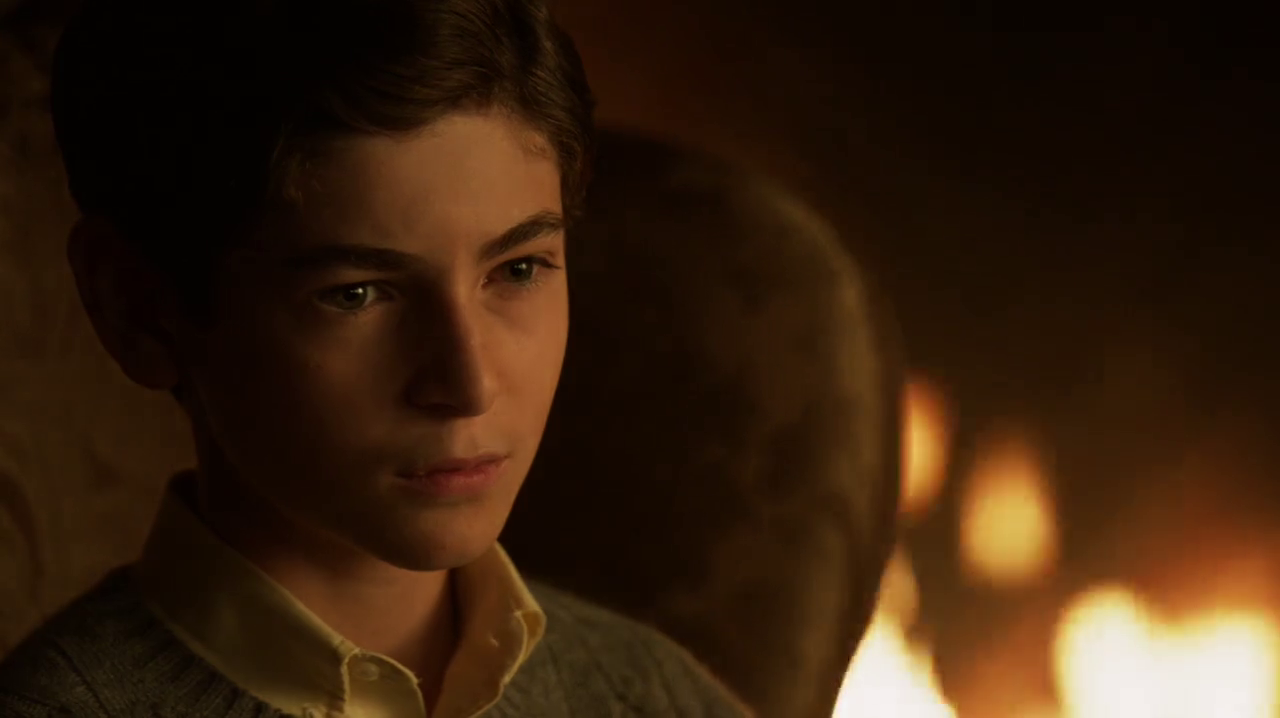
Dave Mazous is a talented boy. Sure, he struggled in the first few episodes of the show but he continues to improve and deliver, in my opinion. Playing the young Bruce Wayne has never been done with such raw vulnerability like Mazous had, and his scenes may sometimes seem too forced in select episodes or even be outright fillers but I think his scattered appearances serve as jigsaw pieces that are finally fitting in the right places as we got closer to the finale. I like watching the young boy who will one day become a man who will fight a crusade against the evils of Gotham. I like how fragile, lonely and slightly disturbed he is, and that underneath all that there's steel and determination to define his place in the world and not just be the orphaned rich boy who witnessed his parents' murder. I can't wait to see what is in store for him next year.


Carmine Falcone

John Doman needs more screen time and with this season's finale putting him on retirement somewhere (which should not be permanent) I am quite sad to know that I will not be seeing him around, more so in the next season. I never expected to even like Falcone in this show but each time Doman gets in a scene, he commands a presence which truly emphasize the fact that his Falcone is a man to respect and fear. His few focal scenes are one of the strongest performances in the show, no doubt, and I pray that the writers will find a way to bring him back because I don't think Falcone would give up his power so easily the way he did in the finale.


Oswald Cobblepot

During the first half of the season, I thought Robin Lord Taylor is such an eerie actor giving top-marks haunting performances that keep me so engaged on screen. The second half, however, has been wasteful on his character. For someone who was built up to be so strategic albeit being insane, Cobblepot started making unforgivably stupid moves in the mob game which I suppose makes him more of the Penguin I recognize from the comics; one who is a pathetic opportunistic slimeball. However, even that Penguin knows how to strategize. In the show, there are times when the writing turns Cobblepot into just a whiny misfit teenager playing a losing game against the big-leagues Falcone and Maroni which lessens his formidability. It just feels off, considering all the build-up of his character's dangerous wit and seemingly clairvoyant prowess from the first ten episodes. Nevertheless, I'm looking forward for this problem to be remedied soon in the next season.   

Special Mentions: Butch Gilzean, Salvatore Maroni and Leslie Thompkins

HIGHLIGHTS

The following are the character arcs and plot directions that I personally found myself very invested on as I watched the show.

1) OSWALD COBBLEPOT CHARACTER ARC (First half of the season)

When Gordon faked his execution of Oswald Cobblepot, the latter spent the first five episodes trying to get back to Gotham and the journey has been both brutal and amusing. With an awkard limp and a deceptively fragile outer appearance, Cobblepot is a target for mockery among the people who make his acquaintance. He has been underestimated and overlooked all his life in spite of his drive, cleverness and ambition. It was his clandestine arrangement with Falcone to embed himself in the opposing gang to earn the trust of Salvatore Maroni which showcased how far he will go to win the game. The first half of the season included some of Robin Lord Taylor's most fantastic performances. He was simply magnetic as the Penguin, whether he is limping and stuttering around to maintain his cover, excessively killing some random person just for the heck of it, or scheming his way to the top. I always look forward to a Penguin scene because he's just so darn unpredictable and entertaining.


2) EDWARD NYGMA CHARACTER ARC (Second half of the season)


A lot of viewers complained about this character's treatment in the first half but by the second half we see some step forward in the right direction for the future criminal mastermind, the Riddler. A less formidable and nerdier version of Oswald Cobblepot, Edward Nygma lurks around GCPD, an unwanted and socially incompetent yet highly intelligent forensics analyst who fails to connect or make meaningful relationships with his co-workers. He is hopelessly love-sick with a woman who has an abusive boyfriend and he annoys his own colleagues with his lack of tact and sense of propriety. His scenes were a gradual descent to madness. As his obsession with his crush worsens, he finds himself committing nefarious acts that unleashed his morbid enjoyment for the macabre. I really found actor Cory Michael Smith to be exceptionally creepy. I feel like the reason Cobblepot didn't get many great scenes on his arc was because the writers want to focus the spotlight of crazy on Nygma which I thought paid off.   


3) JAMES GORDON CHARACTER ARC

The second half of the season has found James Gordon rather sporadic in his actions and choices. But then again, he has been rattled by Comissioner Loeb who wants nothing more but to kick Gordon out of the force since he's such a straight-laced cop that he is in no one's pocket. That may still hold true but Gordon also has been taking more questionable risks lately and the more he makes mistakes or finds himself slightly comprising his values, the more his characters evolve and the situations he is put in all the more beguiling to watch. I'm pretty happy about his arc for the first season. It's engaging with a few dark spots here and there. Overall he has great and insightful interactions with a lots of the characters and I like seeing him in the context of the relationships he struggles to hold together.


4) BULLOCK-HARVEY FRIENDSHIP


Nothing more needs to be said about these two. They have challenged each other with their contrasting priorities. They tried to wear each other down. In the end, their trust for each other only deepened, especially on Bullock's side who is finally learning to see the silver linings again thanks to Gordon and his uplifting state of mind. I love this relationship for all its trials and tribulations. 


5) INTRODUCTION OF LESLIE THOMPKINS


Baccarin is a breath of fresh air as Leslie Thompkins who becomes a medical examiner in the show as oppose to a psychiatrist in the comics. Her chemistry and unmistakably compatible relationship with Gordon has contributed to his character's more relaxed stance in his personal life. I want to see more of Leslie next season and I hope she participates in bigger stories by then.


6) THE WAYNE MURDERS CONSPIRACY


I enjoy the consistent and slow-burn journey in uncovering the real reason why the Waynes were disposed of. The only downer is that Gordon, who originally promised to investigate this case, was far to preoccupied now that it left young Bruce no other choice but to pursue it all on his own. And it looks like he's closer to the truth than he realizes. I have a theory about the possibility that--if the show will be so inclined to the idea--the Waynes were killed to serve a purpose that aligns with the secret gathering of the Court of Owls, as told in Scott Snyder's run in the comics. But this is just wishful thinking on my part.


NOTABLE CRITICISMS

Remember what I said about the fact that writing these reviews help me organized my thoughts and therefore increased my enjoyment of an episode or at least make sense as to why whenever I don't enjoy it? See, I had to stop reviewing the second half of the season because I have a self-imposed X-Men Comics Diet for 2015 in my other comics geek blog so I need to put anything Batman-related on the shelf so I can focus on that other geeky endeavor. I opted to just keep watching as each episode gets aired weekly, and then find time to post one long review to capture all of my final thoughts for the entire season. And let me tell you--not writing about my analyses of the later episodes actually made me enjoy what I was watching less. I don't know if it has more to do with the quality of the later half of the season (which, according to multiple sites, has been all over the place) or with the fact that by simply not intellectually engaging in an episode, and opting for a passive-viewer mode, the flaws of the show became more pronounced for me. In any case, I found myself losing interest and even stopped looking forward to episodes that I actually let three episodes slide, but then I just came back to binge-watch them on a weekend. 

I mentioned a few times during individual episode reviews last year that Gotham has a certain unevenness to its delivery and style which is comparable to the similar problem a show like HBO's Game of Thrones has. I suppose this is only unavoidable, considering the ensemble of characters and plenty of material to showcase in a forty-five minute installment every week. Much like with GoT with its hour-run for every episode, some events in Gotham are merely glossed over or certain plot points are gracelessly crammed together. The effect is a decrease in the tension which then underwhelms viewers; or the tension is far too high all of a sudden without the necessary build-up that transitions to it--a problem that is uniquely resonant in Gotham's finale which I will later discuss. The twenty-two episode format should have helped this show established some stronger foundations and fleshed-out developments but it actually only contributed to the growing problem this show has when it comes to prioritizing storylines and how to give them enough time to breathe and thrive. 

(1) The unevenness in combining influences from the comics source material and other adaptations

This has been made obvious from the very first half of the season although the second half finally took a step back and for once tried to tell stories unique to its own setting and multiple character conflicts. It's only been one season yet so it would be unfair of me to say that this show had nothing to offer to the Batman mythos/universe because I sincerely think it's still finding its own identity. That being said, I maintain that out of the twenty-two episodes, only less then twelve of them are pretty decent while others are too tangled up, too dull or too off-beat to consider a cohesive standlone.

(2) The shoehorning of comic books references that dilute the impact 

A bad example of this was the young girl Ivy who hovered around plants, looking sullen. Edward Ngyma used to be one of this two with his quirky, riddle-telling dialogue exchanged with Gordon and Bullock but it's a good thing we got a more believable development and direction for his character later on. I have to say that a mixed example is the possible Joker character from The Blind Fortune teller, one I'm still not sure how to feel about even as I write this. As for introducing the rogue's gallery: The Mask episode was also a missed opportunity to introduce yet another interesting Bat-villain, but the inclusion Red Hood Gang was something I think was nicely done as well as the two-parter Scarecrow origin story that has some of the most surreal hallucination sequences.

(3) Some really unbelievable character developments or lack thereof 


The greatest fault of Gotham for me lies in its female characterization and the so-called "developments" they had, or a distinct lack of it as the show progressed. Unbelievable ones had to be with Fish Mooney, Selina Kyle and that forgettable filler character Liza. The first two were just all over the map and the only consistent thing about their characterizations were the inconsistency of them, especially leading to the last two episodes of the series; most particularly with Selina. The young girl kills a man rather remorselessly and then joins up with Fish during the finale, having little problem disposing someone like Gordon when he clearly tried to help her out before. Selina showed a great amount of compassion and sympathy especially when around Bruce but then the extreme opposite of it somehow was stark apathy towards violence and death. Her actions in the finale just doesn't make sense. One moment she's calculating, the next she's impulsive. This is not a sign of dynamic character; it's a sign of a conflicted one with no clear objective or motivation to her choices which would make her less of a person to value for a viewer. And I really love Camren Bicondova for the role. 

I've always had a soft spot for Barbara Keen played by Erin Richards, mostly because I like misunderstood, neurotic blonde characters in general. The first half of the season treated Barbara as some sort of trophy girlfriend in the sidelines, making irrational choices that almost got herself and Gordon killed. The second half gave her some spooky material to work with which Richards delivered well enough for me, especially when she completely broke down and literally hunted down Leslie Thompkins with a knife, giggling and wide-eyed the entire time it was happening. As fun and creepy as that scene was and the scenes with the Ogre that she had, Barbara remains two-dimensional. A lot of the viewers have no sympathy for her already so I believe that her downward spiral to madness lacked emotional impact. 


(4) Underuse its talented cast 

Jada Pinkett-Smith is a fabulous actress with an intensity to her performance for Fish Mooney that on some level appeals to me greatly but I find that the storylines she is constantly being hitched to are either absurd and out-of-place in its campiness or bizarrely uncomfortable to watch. Of all the actors, she plays her character with a captivating harshness but oftentimes she can get over-the-top and ridiculously vindictive in countenance and presence alone. Still, I thought Fish was the perfect villainess for this show. She has charisma, she has style and she's not afraid to step on a few heads and broken bones to survive. This is further displayed when we see her all alone in the island with the Dollmaker and some fugitives where she won them over and she held up long enough to escape the godforsaken place and return to Gotham...only to get killed.

I refuse to believe she's dead, by the way.

Robin Lord Taylor's Oswald Cobblepot is a show-stealer but the second half left so much to be desired in the character. He was a hollow shell by the finale, outright gunning down people while whining in desperation to get his turn on the throne. It's..tacky and a complete disservice to what I originally perceived to be a remarkably, cunning man who can be frightening when he allows himself to be. In the finale, he was a puddle of mess and literally got lucky enough to throw Fish off a bridge and the fact that Falcone is old and wants to retire and enjoy the rest of his twilight years somewhere far from Gotham. His rivalry with Maroni was anti-climactic. It was Fish who ended his life with a headshot that was shocking and unexpected, yes, but ultimately robbed the satisfaction for the viewers to see a tense face-off between Maroni and Cobblepot who have axes to grind on each other, if not literally. Killing Salvatore Maroni so early on in the game is also wasteful. David Sayas is a fine actor and his role in the show could have been explored more for its next season. Instead what we got in the finale was the irreconcilable fact that his character was reduced into some arrogant and stupid chauvinist who couldn't keep his mouth shut that Fish was driven to murder him from where he stood. Yeah, I'm just gonna say it:

(5) The Finale was weak when it came to the delivery of the stakes and suspense. It had a rather rushed pay-off, and offered no long-term resonance

...because of those main reasons I stated above. I have no energy to talk about it anymore so I'm afraid I'm going to have to cut this review short since I've been going on for a while and y'all may be tired reading this post. Honestly, I've been writing this for two and a half days now so I think it's time to mercifully just end it and give my final rating below.

OVERALL RATING FOR THE FIRST SEASON: 3.25 out of 5 STARS